Out of the Closet and Into the Street (2003–2025)
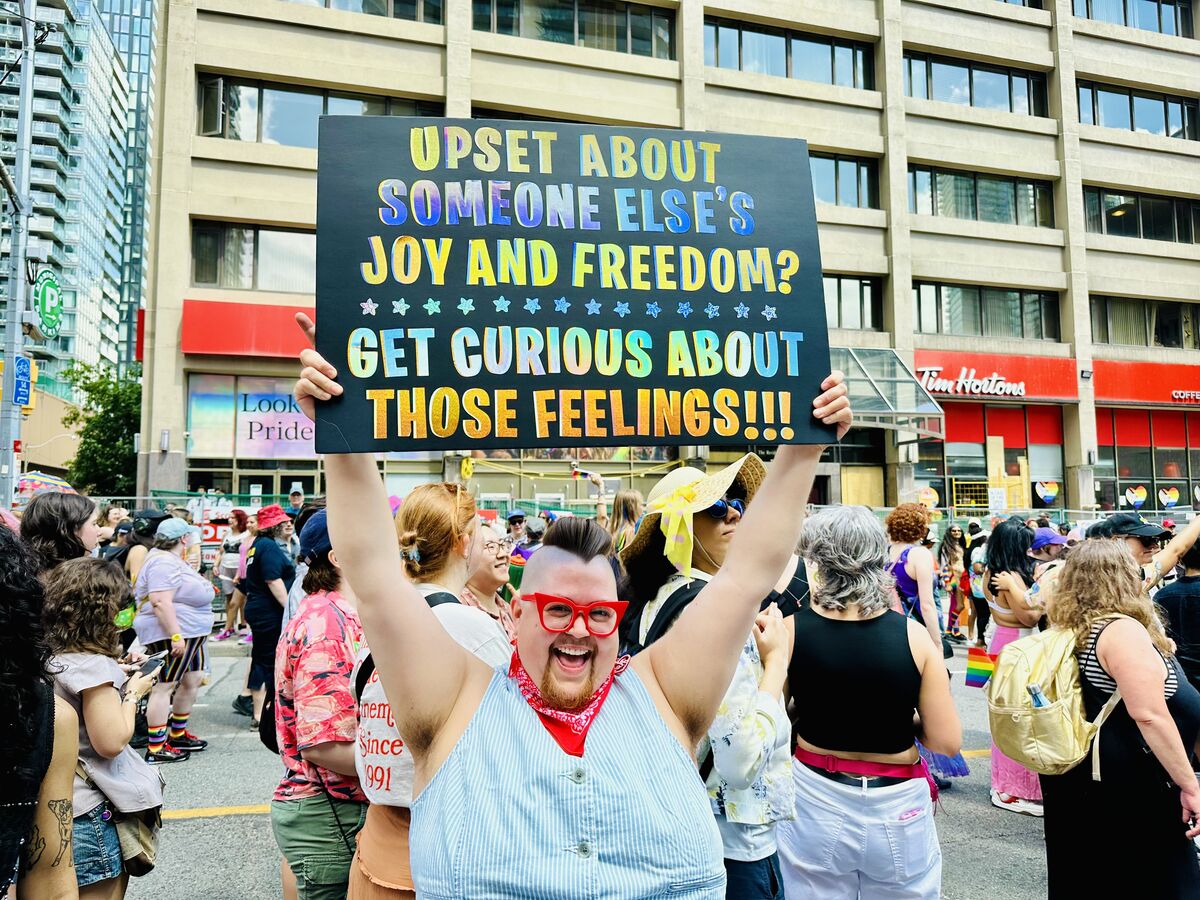
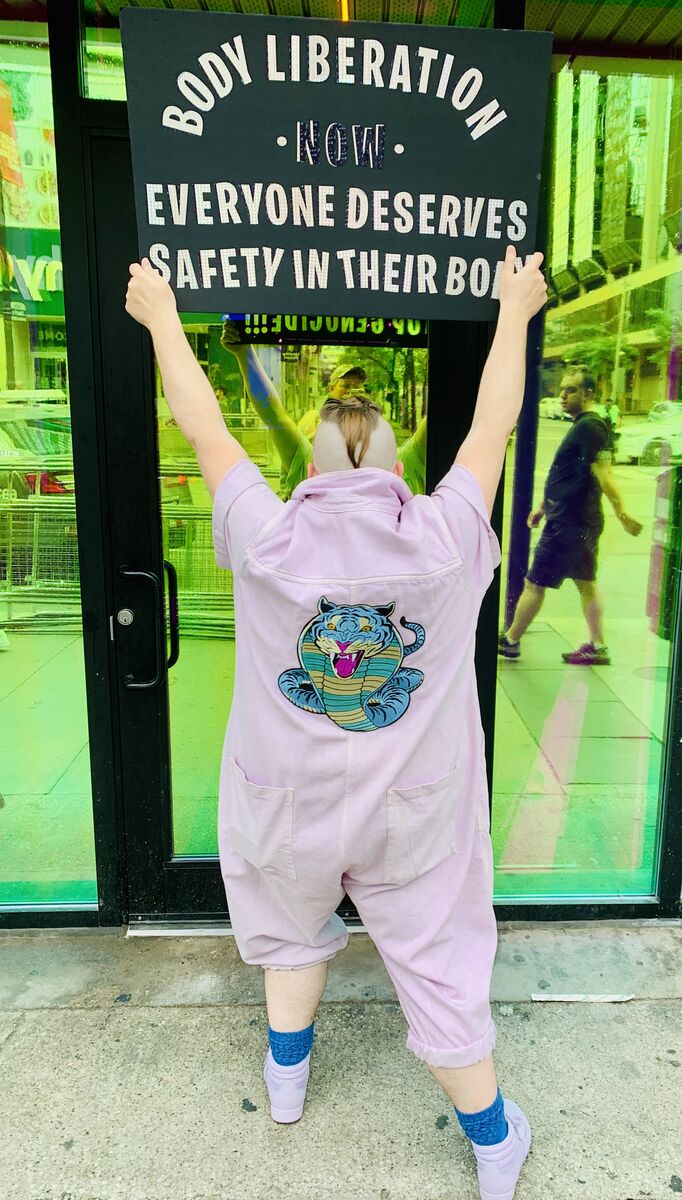
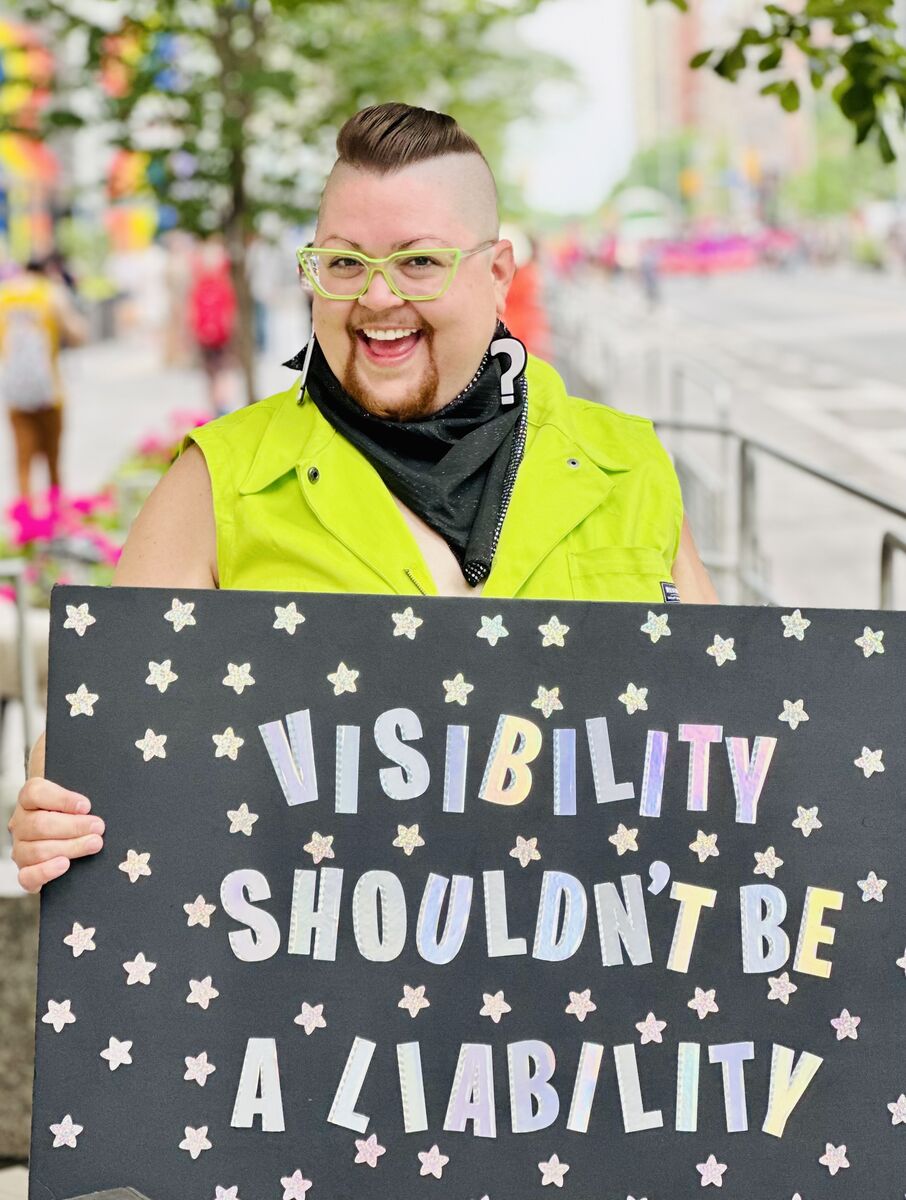
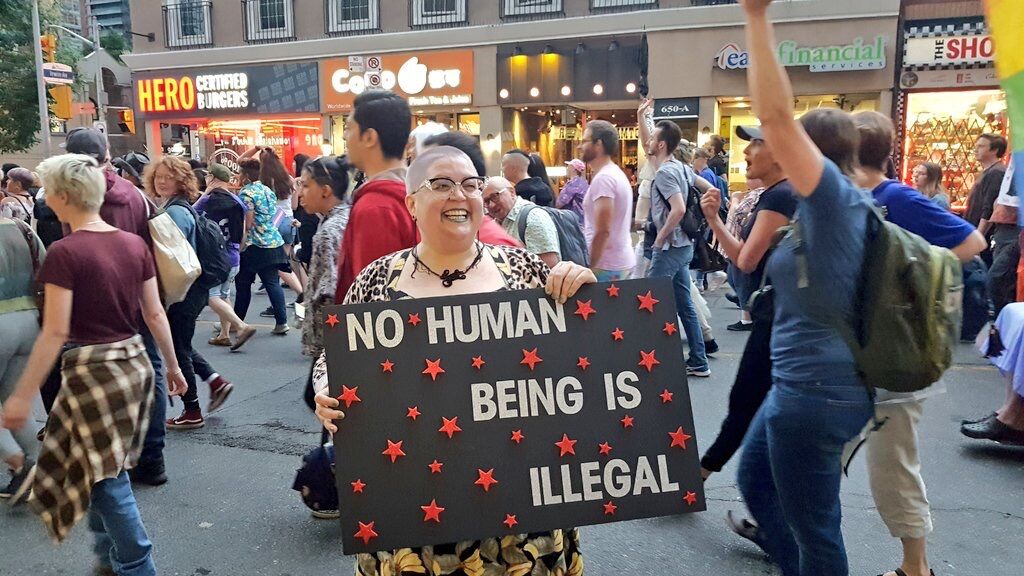
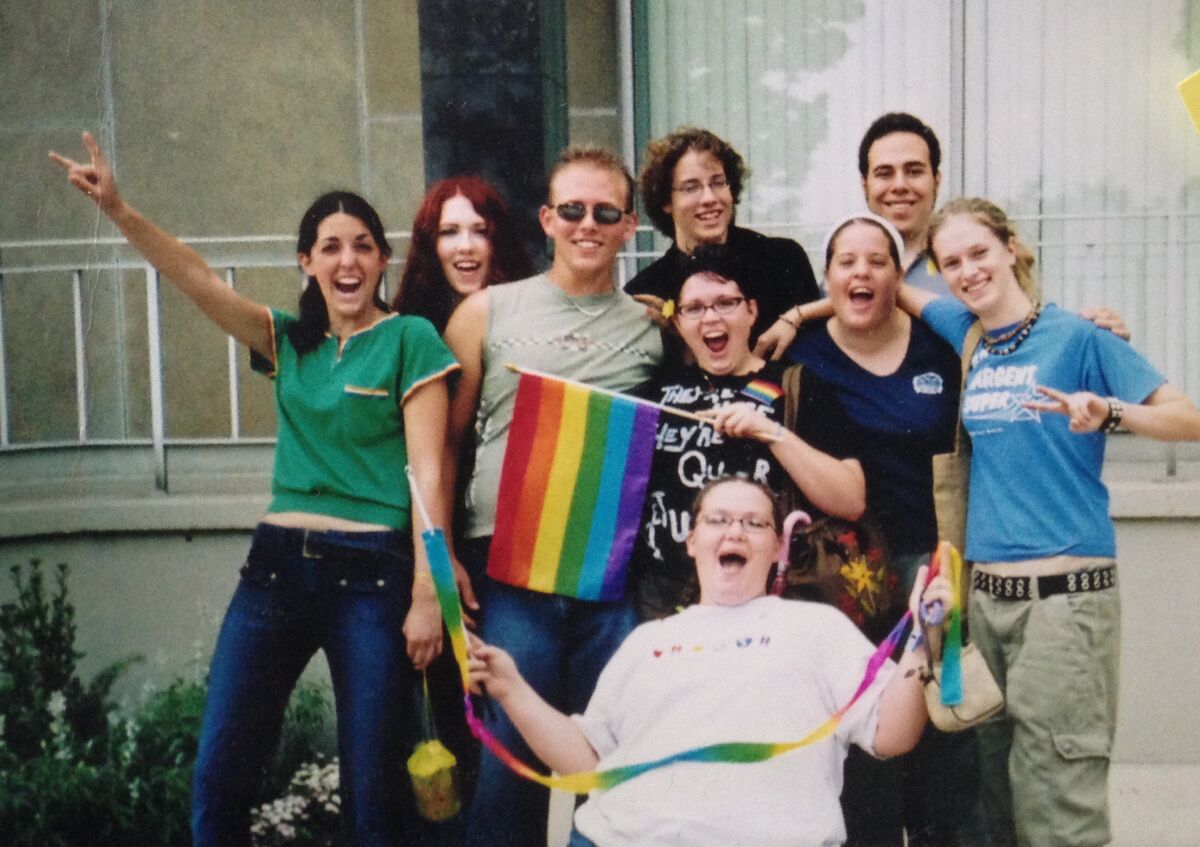
I attended Pride for the first time at seventeen in my hometown, excitedly supporting my recently out first boyfriend along with a crowd of our theatre friends. As a roaringly passionate ALLY!!! I had hand painted a t-shirt and proudly marched down the waterfront with the words “They’re Here, They’re Queer, Get Used to It!” across my chest, still unaware that the “them” I was talking about was me! Looking back at the picture we took in front of city hall all decked out in our rainbow best, I remember how powerful it felt to show up loud and proud in public so that our queer-unfriendly community couldn’t pretend we weren’t there.
Riotous (self)expression is my favourite part of Pride. I love how we show up for ourselves and each other in all our flamboyance, seizing the opportunity to take up space and to remind one another how powerful/empowering togetherness is. Being true to who you are in a world that makes it dangerous is exhausting and difficult, and gathering at Pride provides an important opportunity to bolster one another for the hostility that’s coming at many of us the rest of the year.
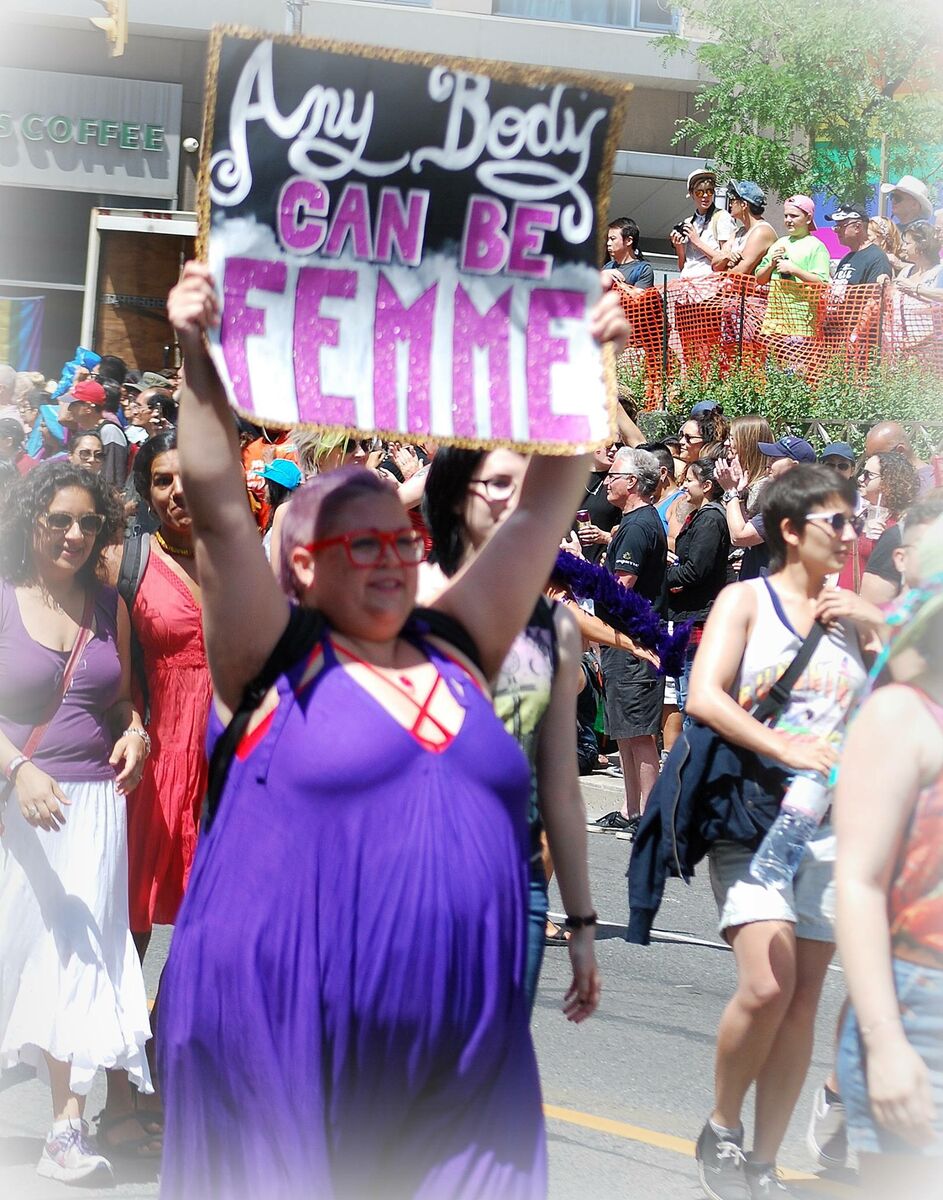
Many queers—myself included—put a lot of time, energy and resources into how we show up at Pride. “The personal is political” as the feminist maxim reminds us, and what we put on our Pride signs and the other choices we make about how we (re)present ourselves are highly personal and political. Folks use all kinds of Technologies of Self to express their personhood, communicate their values, and engage in (intergenerational) community knowledge sharing and support. For some, it’s the only opportunity we have all year to express ourselves more authentically than we’re able to outside of this ephemeral, collaboratively created community space/place of greater safety—an opportunity to shine brightly for ourselves, but also to model for others that boldly being who we are is a possibility.
When folks show up using their freedom of expression in an attempt to harm us, we keep each other safe. One year I was grateful to a cisgender bisexual who created a physical and sonic barrier between an anti-2SLGBTQIA+ street preacher trying to disrupt the Trans March with violent sentiments and the gender splendour in the streets by standing in front of him with their arms spread and a boom box blaring queer tunes—just one example of the kind of acts of community care that regularly take place while we’re together in the streets.
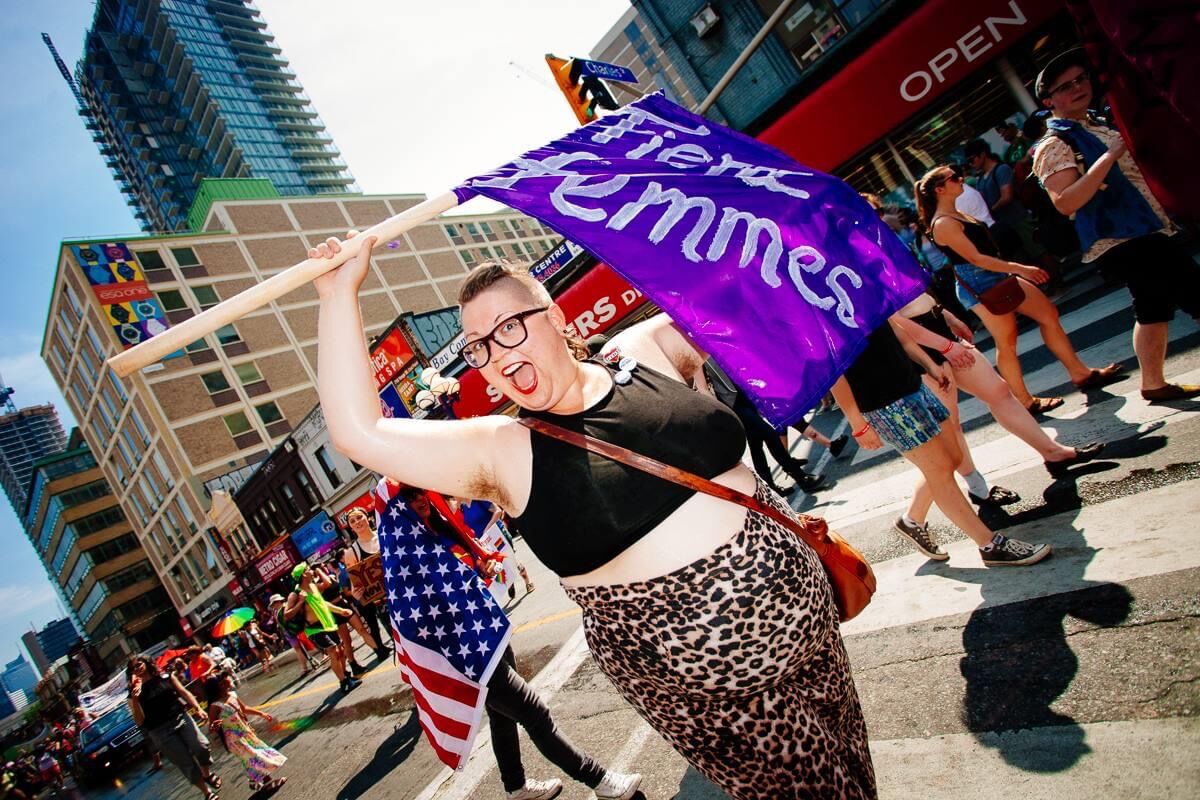
And the signs! Oh the signs! I adore the ways in which we avail ourselves of this opportunity to communicate loudly and proudly about who we are and what we’re about as people/communities who have repeatedly been deprived of direct communication with one another/about ourselves. Sure we’ve still got lots of coded symbols/markers of queerness going on in alignment with our inheritance of queer flagging (this bandana clad queer is a big hanky code fan!) but many of us also put a lot of effort into crafting evocative signs and banners emblazoned with messages in support of our fellow queers directly or encouraging better behaviour and greater support from onlookers en-route.
Our signs also function as a community “pulse-check”, as they make evident which political struggles and issues of social justice we feel are most pressing and in need of immediate attention in a given moment. As (often multiply) marginalized people with politicized, queer ways of knowing and being in the world, we’re hyper-aware of these things and often personally impacted by the dire social concerns we highlight…and we want to communicate about them in all caps with a little sparkle! I’m always so grateful for the community voice that emerges, and the diversity of perspectives communicated in this democratized space of mass communication. We’re all the captains of our own underpants when it comes to how we show up at Pride—our choices are dictated by access (e.g. to clothing in alignment with our desired self/gender expression; to the means to travel to the march or to purchase materials to make a sign; to safety and respect while we travel to and from the protective space of community gathering; etc.), but no one’s “in charge” of what shows up on our protest signs, the way we style ourselves while we hold them, or how we choose to celebrate and resist together while taking them to the streets.
I love to march with you all, surrounded in every direction by glorious, free humans holding signs emblazoned with a wide array of declarations of self; encouragement for peers marching alongside us and those who have not yet come out of the closet to join in because it isn’t safe or accessible to do so; reminders of shared humanity and demands for basic respect and care; and expressions of gratitude for the long lineage of queer elders who have marched in the streets before us to fight for our rights, including the right to keep doing so. It fills me up and keeps me going for the whole rest of the far less gregarious year, and I hope the words of appreciation we yell at each other while we’re marching keep you going too!
(The button on my chest in the image representing this section is one of my favourite treasures. I was awarded it for my service as a cruising demo participant during an ArQuives tour of Toronto’s Queer Village for showing off my flirtation skills (in service of our collective learning!) on a queer historical cruising spot on the stairs in front of what is now a favourite gaybourhood restaurant. Getting to keep this tiny piece of queer love and resistance from riotous queers who came before me close to my heart is an honour; and an all-the-time reminder of the lineage of taking to the streets in service of our collective belief in a safer, more just world for us all that brings me such joy every Pride.)